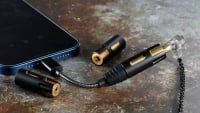
事隔兩年多的時間,Zorloo 為 Ztella 推出第二代了,名為 Ztella II。接駁訊源的一端依舊使用 USB Type-C,做到一插即用,可連接手機、iPad 或個人電腦等等;最大分別是接合耳機的一端,改用上 4.4mm 平衡輸出插口,而輸出功率比上代增強了不少,很容易就可感受得到強大的驅動力。


For authentic and "proper" content, consider following these established brands and educational platforms:
Noah Baumbach’s Marriage Story focuses heavily on the painful process of divorce, but its final act serves as a profound look at the inception of a modern blended family. The film illustrates how love for a child forces adults to reshape their lives, showing the painful adjustments required to establish new routines across separate households. Instant Family (2018) – The Chaos of Foster Adoption
What is the or length requirement for your article?
Documentaries, too, are offering unfiltered glimpses. profiles a couple with 12 children—seven biological and five adopted with special needs—presenting a stark, honest look at the daily logistics and profound love required to make a nontraditional home work. The filmmaker observed that “Success to them is not pushing them to go to Harvard… Success to them is how to live a good life, to be kind.” This reframing of parental success is central to the modern understanding of blended families, where harmony is not guaranteed but earned through daily acts of patience.
Importantly, scholars like Angel Petite have argued that stepfamily film portrayals often “reflect the experiences of ‘real life’ stepfamilies; however, serious problems… are usually completely resolved by the end of the film.” The modern era’s move toward ambiguity and incomplete resolutions is a direct response to this critique, indicating that filmmakers are now listening to both the data and the lived experiences of diverse family units.
Modern cinema has also expanded the definition of blended families to include LGBTQ+ dynamics and multicultural households.
Conversely, films like The Sound of Music or The Brady Bunch often presented idealized figures who seamlessly integrated into a new household with minimal friction, solving deeply rooted family traumas through sheer optimism.
For decades, cinema leaned on the "Wicked Stepmother" archetype—a trope that historically painted stepparents as intruders or disruptors of a "natural" order. Modern cinema is finally growing up.
By prioritizing the child's internal world, modern directors show that blending a family is not a singular event, but a continuous, years-long psychological adjustment for the youth involved. The Shared Room: Step-Sibling Chemistry
A detailed of blended family movies An analysis of how LGBTQ+ blended families are portrayed The portrayal of step-sibling dynamics specifically
The most significant change in recent years has been the willingness of prestige filmmakers to treat blended family dynamics not as a plot device for comedy, but as a deep well of psychological and emotional drama.
The Historical Context: From Evil Stepmothers to Wacky Hijinks
For authentic and "proper" content, consider following these established brands and educational platforms:
Noah Baumbach’s Marriage Story focuses heavily on the painful process of divorce, but its final act serves as a profound look at the inception of a modern blended family. The film illustrates how love for a child forces adults to reshape their lives, showing the painful adjustments required to establish new routines across separate households. Instant Family (2018) – The Chaos of Foster Adoption
What is the or length requirement for your article?
Documentaries, too, are offering unfiltered glimpses. profiles a couple with 12 children—seven biological and five adopted with special needs—presenting a stark, honest look at the daily logistics and profound love required to make a nontraditional home work. The filmmaker observed that “Success to them is not pushing them to go to Harvard… Success to them is how to live a good life, to be kind.” This reframing of parental success is central to the modern understanding of blended families, where harmony is not guaranteed but earned through daily acts of patience.
Importantly, scholars like Angel Petite have argued that stepfamily film portrayals often “reflect the experiences of ‘real life’ stepfamilies; however, serious problems… are usually completely resolved by the end of the film.” The modern era’s move toward ambiguity and incomplete resolutions is a direct response to this critique, indicating that filmmakers are now listening to both the data and the lived experiences of diverse family units.
Modern cinema has also expanded the definition of blended families to include LGBTQ+ dynamics and multicultural households.
Conversely, films like The Sound of Music or The Brady Bunch often presented idealized figures who seamlessly integrated into a new household with minimal friction, solving deeply rooted family traumas through sheer optimism.
For decades, cinema leaned on the "Wicked Stepmother" archetype—a trope that historically painted stepparents as intruders or disruptors of a "natural" order. Modern cinema is finally growing up.
By prioritizing the child's internal world, modern directors show that blending a family is not a singular event, but a continuous, years-long psychological adjustment for the youth involved. The Shared Room: Step-Sibling Chemistry
A detailed of blended family movies An analysis of how LGBTQ+ blended families are portrayed The portrayal of step-sibling dynamics specifically
The most significant change in recent years has been the willingness of prestige filmmakers to treat blended family dynamics not as a plot device for comedy, but as a deep well of psychological and emotional drama.
The Historical Context: From Evil Stepmothers to Wacky Hijinks