Welcome back!
Ready to check out?
You're just one click away from fantastic style and even better savings!
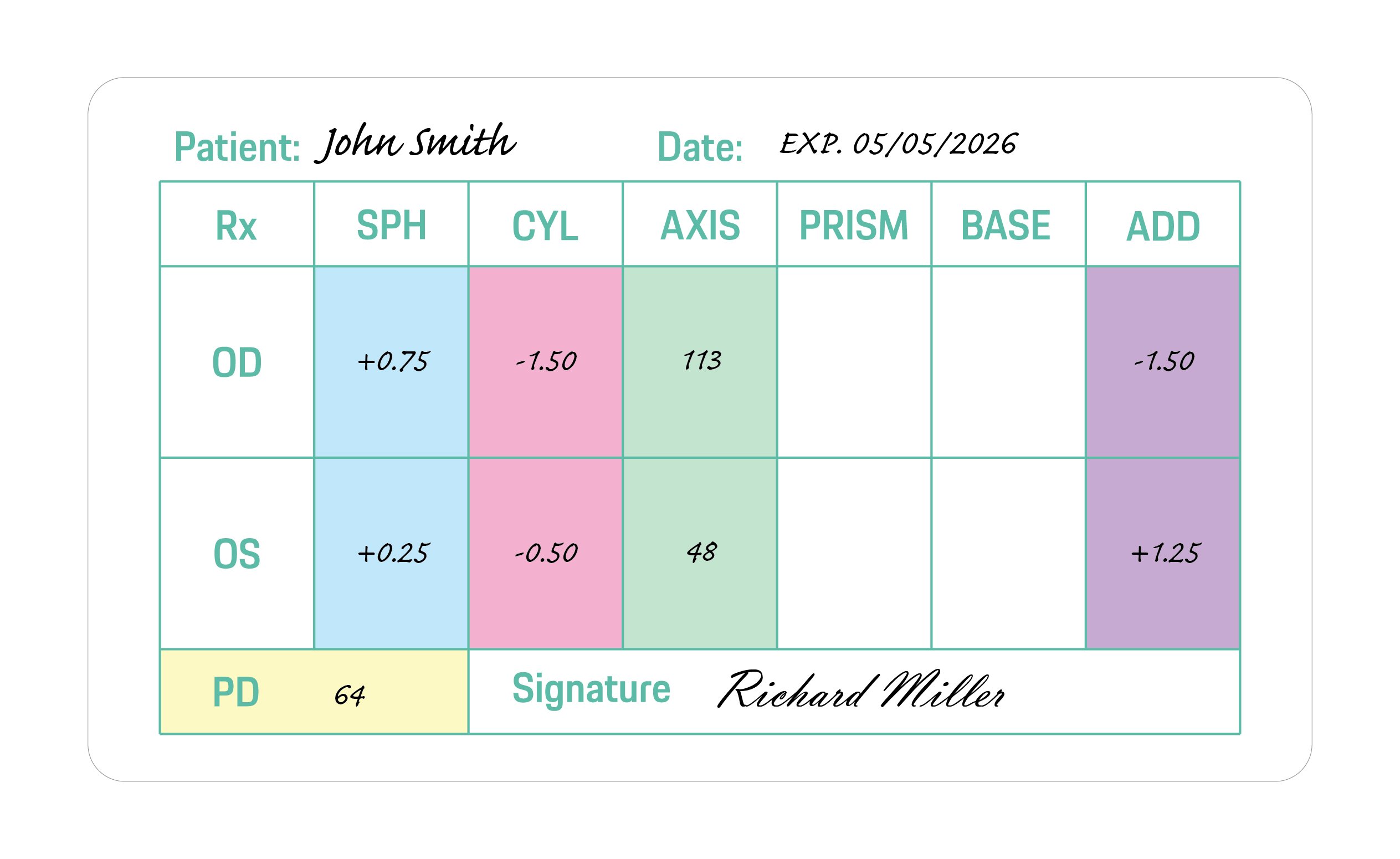
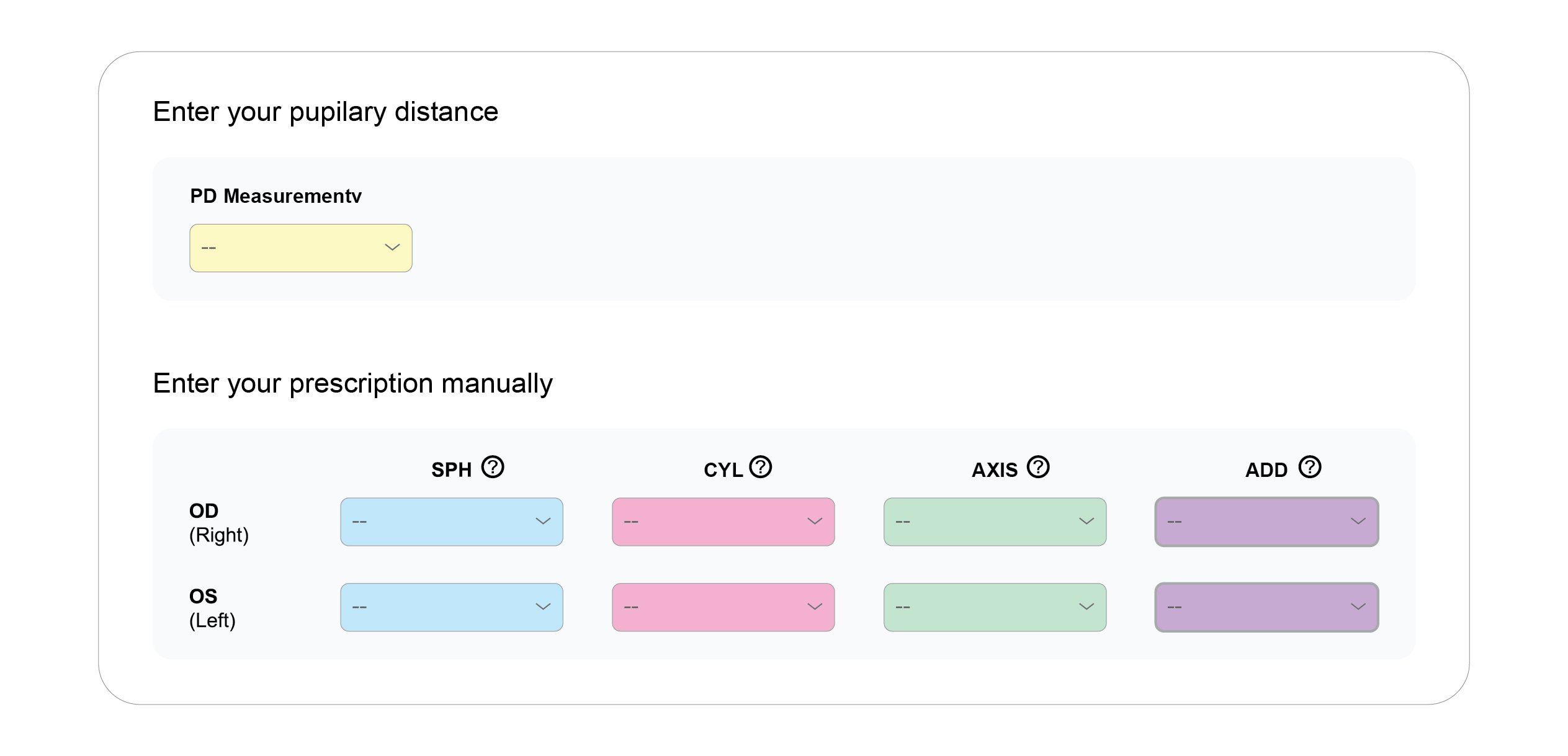
OD is an abbreviation for the Latin term oculus dexter which means right eye. Notice that the right eye information is asked for first even though we typically read from left to right.
OS is an abbreviation of the Latin oculus sinister which means left eye. That will be referenced on the far right column of the prescription.
SPH is short for sphere. The sphere of your prescription indicates the power on the lenses that is needed to see clearly. A plus (+) symbol indicates the eyeglass wearer is farsighted. A minus (-) symbol indicates that the eyeglass wearer is nearsighted.
CYL is short for cylinder. The cylinder indicates the lens power necessary to correct astigmatism. If the column has no value (is blank), it indicates that the eyeglass wearer does not have astigmatism. If this is the case on your prescription, you can leave it blank when entering it in.
AXIS is a prescription will include an axis value for those with astigmatism. This number represents the angle of the lens that shouldn't feature a cylinder power to help correct your astigmatism.
ADD is short for "additional correction." This is where details about bifocals, multifocal lenses or progressive lenses would appear.
If you entered this search term looking for the book, you are likely interested in Gladwell's theories on why some people achieve extraordinary things while others, with equal intelligence, do not. Gladwell defines an "outlier" as something or someone that stands apart from others, differing markedly from all other members of a particular group or set.
The search term "Outliers Malcolm McDowell Pdf" is a perfect storm of two famous Malcolms.
If you are looking to download or read digital materials related to these topics, it helps to use precise terminology to bypass search engine confusion:
Expertise requires intense, deliberate practice. Gladwell claims that achieving mastery in any complex field requires a minimum of . He uses the Beatles' grueling performance schedule in Hamburg and Bill Gates’ early access to a computer terminal in 1968 to prove that elite performers are given the rare opportunity to practice more than anyone else. 2. The Matthew Effect (Accumulative Advantage) Outliers Malcolm Mcdowell Pdf
IQ only matters up to a certain point (roughly 120); after that, other factors take over. Practical Intelligence
This public link is valid for 7 days and shares a thread, including any personal information you added. This link or copies made by others cannot be deleted. If you share with third parties, their policies apply. Can’t copy the link right now. Try again later.
: Mastery requires roughly 10,000 hours of deliberate practice. If you entered this search term looking for
Derived from the biblical Gospel of Matthew, this principle states that those who are given early, slight advantages receive more resources, better coaching, and more attention. Over time, these small initial advantages compound into massive, unbridgeable gaps between the "chosen" outliers and everyone else. Case Study: Malcolm McDowell as a Gladwellian Outlier
: Use the example of the "Culture of Honor" in the American South or why Asian students may excel at math due to a historical legacy of rice paddy farming (which required intense, year-round labor).
While your search for a PDF may have been a mistake, the phrase is actually a brilliant description of his career. In Gladwell’s definition, an outlier is a person who lives outside the traditional bell curve of experience. By that measure, Malcolm McDowell is the ultimate outlier. If you are looking to download or read
: The month you are born drastically impacts your chances of success in structured environments.
This guide is therefore focused on the book by . The actor's name is a common point of confusion, but the "PDF" part of your search will lead you to resources for Gladwell's text.
| Subject of Analysis | Key Factor Examined | | :--- | :--- | | Canadian Hockey Players | Birthdate and age cutoffs (The Matthew Effect) | | The Beatles | Opportunity, relentless practice (10,000-Hour Rule) | | Bill Gates | Access to computers and fortunate timing | | Christopher Langan (a genius) vs. J. Robert Oppenheimer | Practical intelligence, social savvy, and family background | | Joseph Flom (a successful lawyer) | The unique opportunities presented by market shifts and being in the right place at the right time | | Cultural legacies of the Kentucky hills | The impact of a "culture of honor" on behavior | | Korean Air pilots (and others) | Communication styles and their impact on safety (The Ethnic Theory of Plane Crashes) | | Asian students and math proficiency | The cultural legacy of hard work ingrained in rice paddy agriculture |
*Discount applied on the current website price at the time of order. Offer only valid for new customer first contacts order over $10. Maximum discount of $100. Cannot be combined with any other offers. Promotions are subject to change without notice. We reserve the right to cancel orders that are in breach of the terms and conditions of this offer.



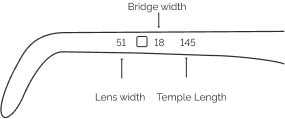
| Lens Width | Bridge Width | Temple Length | |
|---|---|---|---|
| XS | < 42 mm | < 16 mm | <=128 mm |
| S | 42 mm - 48 mm | 16 mm - 17 mm | 128 mm - 134 mm |
| M | 49 mm - 52 mm | 18 mm - 19 mm | 135 mm - 141 mm |
| L | >52 mm | >19 mm | >= 141 mm |
Buying eyewear should leave you happy and good-looking. Use our sizing tool to find frames that best fit your unique facial measurements.
Grab a regular card with a magnetic stripe on the back. Student IDs, credit cards and gift cards work well to start our online PD tool.
You may have received our paper PD measurement tool in your recent online order. In order to use this tool, place the ruler on your eyes so that the "0" lines up at the centre in between your eyes. Add up the two numbers, to get your PD. See example below:
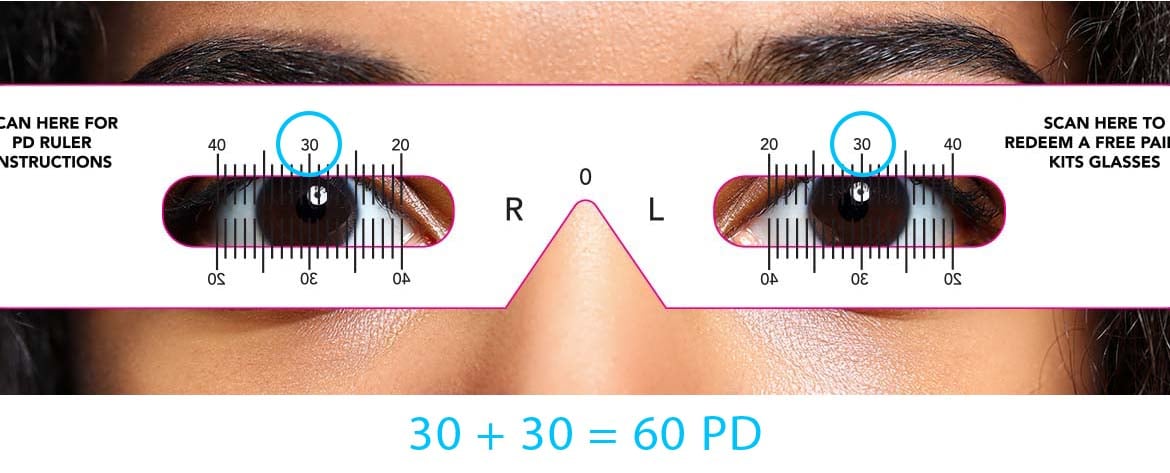
Click on this link to download and print your own PD measurement tool.
DOWNLOAD



 Check order status
 Place reorder
 Chat with us





 Use your insurance
 Help
Help