
To make DJMAX RESPECT mode work, special converter is necessary
To use DJMAX RESPECT mode, the latest firmware is necessary
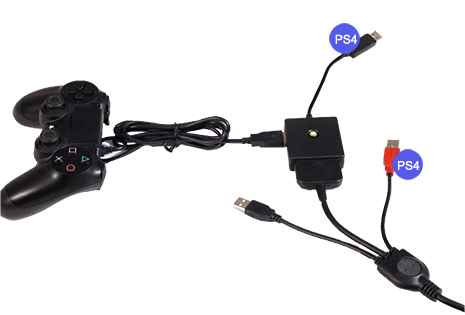
After you connect the controller according to the following steps, you can make DJMAX RESPECT mode work normally.
Converter doesn’t support PS4 PRO game body for the time being.
The blue pilot light of the converter should turn green, and keep shining after flashing about 30 seconds, then you can play game copyrighted artists script auto answer auto s better
Press start+select+5, simultaneously about a second, PS2 IIDX mode and DJMAX RESPECT mode of the controller can be switched repeatedly
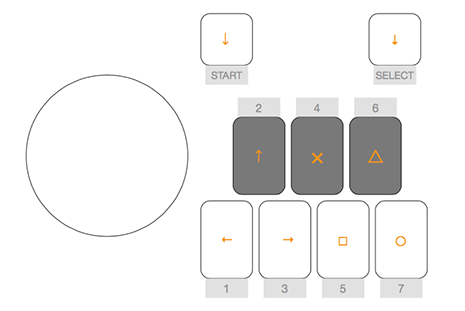
Key mapping is shown as following image
| Controller | PS4 key |
| Start | left stick ↓ |
| Select | right stick ↓ |
| 1 | ← |
| 2 | ↑ |
| 3 | → |
| 4 | × |
| 5 | □ |
| 6 | △ |
| 7 | ○ |
| Rotate turntable clockwise | left stick ↓ |
| Rotate turntable counterclockwise | left stick ↑ |
| Controller | PS4 key |
| Start+Select+4 | Option |
| Start+1 | L1 |
| Start+2 | R1 |
| Start+6 | R2 |
| Start+7 | L2 |
| Start+Select+5 | Switch for PS2 IIDX/DJMAX RESPECT game mode |
The details of the other questions are shown in “Common Question” in the bottom of this page
Platforms must ensure that automated legal decisions provide clear, accessible paths for human review. Simultaneously, AI developers must refine automated data-attribution models. This ensures that when the "auto" features of an AI deliver a high-quality product, the copyrighted artists who inspired the underlying training data are recognized and compensated.
Based on the classification, the script deploys a specific, legally vetted template.
The technology driving automation has evolved from rigid, rule-based if/then scripts into highly adaptive AI models. The "auto" aspect is improving in three distinct dimensions. 1. Contextual Semantics and Nuance
The explosion of generative AI has created a fundamental asymmetry between AI developers and individual creators. Stability AI, Google, OpenAI, Midjourney, and Runway AI have trained their models on massive datasets—often containing —without obtaining explicit permission from or providing compensation to the original artists.
Artists no longer need to spend hours scouring the internet for stolen work or drafting individual legal notices. Advanced, AI-backed scraping services allow creators to input their portfolio. The service then automatically tracks, verifies, and auto-files claims against infringers. The Dilution of Artistic Monopolies
This public link is valid for 7 days and shares a thread, including any personal information you added. This link or copies made by others cannot be deleted. If you share with third parties, their policies apply. Can’t copy the link right now. Try again later.
Human writers break rules intentionally to create new styles. AI only follows rules established by human data. Innovation requires the exact human deviation that software tries to eliminate. Ethical Context
Before diving into the technical solutions, it is essential to understand the legal framework within which automated copyright systems must operate. The past two years have produced a series of landmark rulings that fundamentally reshape the ground rules for AI training and copyright enforcement.
Historically, these automated scripts were blunt instruments. Early algorithmic detection routinely flagged fair-use content, public domain art, or even original pieces uploaded by the creators themselves. The automated answers sent to artists were notoriously rigid. They offered little room for nuance or human appeal, leading to widespread frustration in the creative community. Why the "Auto" in AI is Getting Better